Product Description
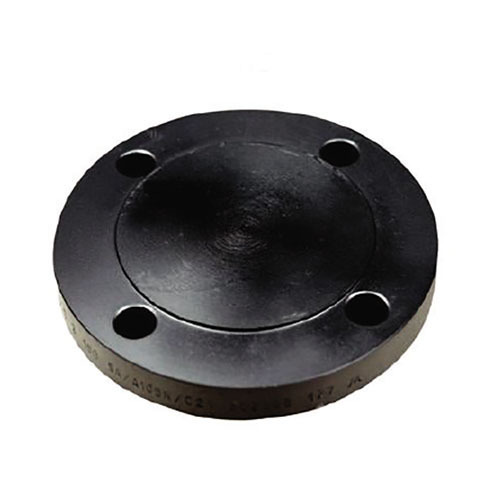
Blind Flanges
Technical specification
- Standards : ANSI B16.5, ANSI B16.47 Series A & B, MSS SP44, ASA, API-605, AWWA, Custom Drawings
- Size : 1/2 (15 NB) to 48 (1200NB)
- Class/Pressure : 150#, 300#, 600#, 900#, 1500#, 2500#, PN6, PN10, PN16, PN25, PN40, PN64 etc.
- Flange Face Type : Flate Face (FF), Raised Face (RF), Ring Type Joint (RTJ)
- Stainless Steel Socket Weld Flanges : ASTM A182 F304, F304L, F310, F316, F316L, F317, F317L
- Carbon Steel Socket Weld Flanges : ASTM A105/A105N, A694 F42, F46, F52, F60, F65, F70, A516.60, 65, 70
- Low Temperature Carbon Steel Socket Weld Flanges : ASTM A350, LF1, LF2 CL1/CL2, LF3 CL1/CL2
- Test Certificates : Manufacturer Test Certificate as per EN 10204 / 3.1B, Raw Materials Certificate, 100% Radiography Test Report, Third Party Inspection Report
Versatile Connection OptionsChoose from various end connections such as butt weld, threaded, and lap joint to suit different pipeline configurations. Our blind flanges are engineered to fit multiple shapes and are available in polished or anti-rust coated finishes, ensuring compatibility with a range of piping systems and environments.
Strict Quality and Dimensional StandardsEach flange adheres to international standards, ensuring reliable tolerances and fit. Comprehensive testing, including hydrostatic, ultrasonic, and pneumatic, guarantees structural integrity and leak-proof performance even under high pressure up to Class 2500#.
Customizable and Ready for ExportWe cater to unique requirements with options for custom dimensions, finishes, and marking. Packaging is tailored to your needs, provided in robust wooden cases or pallets for safe transit. As an experienced exporter, importer, manufacturer, and supplier in India, we ensure timely and reliable delivery worldwide.
FAQs of Blind Flanges:
Q: How are blind flanges with different face types, like RF, FF, and RTJ, used in industrial pipelines?
A: Blind flanges with Raised Face (RF), Flat Face (FF), and Ring Type Joint (RTJ) are used to seal the end of pipelines, valves, or pressure vessel openings. The choice of face type ensures compatible sealing with the adjoining flanges to prevent leaks and accommodate specific pressure or gasket requirements in petrochemical, oil & gas, and water treatment applications.
Q: What materials and grades are available for your blind flanges, and how does this affect their performance?
A: Our blind flanges are available in stainless steel (304, 316, 316L, 321, 304L), carbon steel (A105), and alloy steels (F11, F22, F304, F316). Each grade offers distinct benefits: for example, stainless steel provides high corrosion resistance and purity (>99%), making it ideal for chemical and marine environments, while carbon and alloy steels deliver high strength for elevated pressure and temperature service.
Q: When should I consider using a blind flange with polished or anti-rust coated surfaces?
A: You should select polished or anti-rust coated blind flanges when the application environment requires added protection against corrosion or contamination. Polished surfaces are excellent for hygiene-critical or aesthetic needs, while anti-rust coatings extend service life in moisture-prone or outdoor installations.
Q: Where do you export your blind flanges, and how are they packaged to ensure quality during transit?
A: We export our blind flanges worldwide, serving clients in industries such as power generation, oil & gas, and water treatment. They are packaged in sturdy wooden cases, pallets, or as required to prevent damage, maintain finish quality, and ensure safe delivery regardless of destination.
Q: What testing processes do your blind flanges undergo before delivery?
A: Every flange undergoes rigorous hydrostatic, ultrasonic, and pneumatic testing to verify integrity, leak-proof performance, and compliance with international standards. This ensures each product meets strict operational and safety requirements for demanding environments.
Q: How does your MOQ of 10 pieces and customizable options benefit industrial buyers?
A: A minimum order quantity of just 10 pieces allows flexibility for smaller projects or urgent maintenance needs. Customization in size, marking, and finish helps buyers tailor the flanges to exact project specifications, optimizing fit and performance while reducing waste.
Q: What are the main advantages of using your blind flanges in pipeline and process systems?
A: Our blind flanges provide secure closure, corrosion resistance, and high strength, making them ideal for demanding applications. Their compliance with global standards, extensive testing, and customizable features ensure durability, operational safety, and optimal fit for diverse industrial systems.










 Send Inquiry